



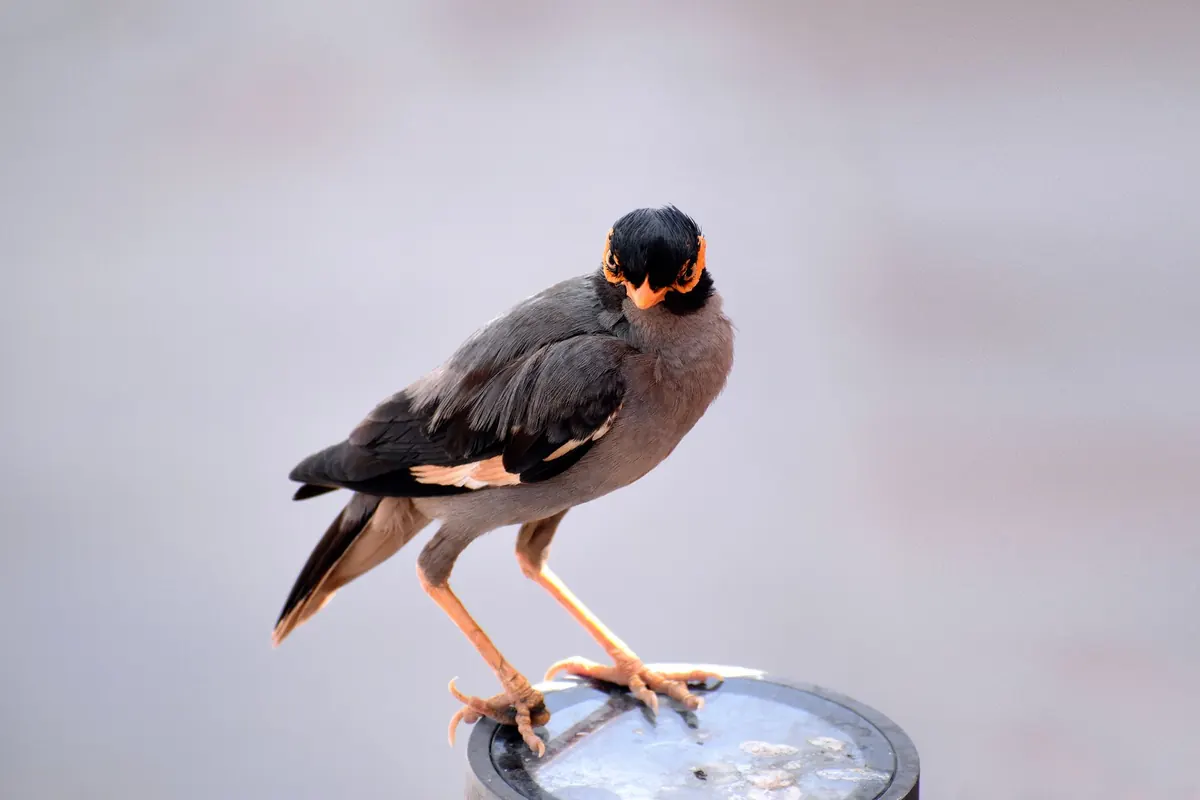
Most birders meet their first ringed bird by accident. You are scanning a flock of Sanderling on the beach, or watching Black-headed Gulls on the park lake, and suddenly there it is: a thin metal band above the foot, or a neat stack of coloured plastic on the leg. What you do next takes a few minutes and turns a pleasant sighting into a genuine data point in a scheme that has been running for well over a century.
Why birds are ringed at all
A ring turns an anonymous bird into a known individual. Instead of guessing how long a Curlew lives, where a Swift spends the winter, or whether the same Turnstone returns to the same stretch of estuary each autumn, we can follow named birds through time. That is only possible because trained, licensed ringers catch and mark birds under the BTO's ringing scheme, and it only works because somebody later reads the ring and reports it.
Ringers mark many birds for relatively few recoveries, so every report counts. A single resighting can confirm a migration route, add years to a known lifespan, or show that a site being considered for development is used by birds from several different breeding populations.
What to record before you forget it
Get the details down while the bird is still in front of you, or immediately afterwards. The following are the things that make a report usable rather than interesting-but-useless:
- Species — and be honest if you are unsure. "Probable Herring Gull" is more useful than a confident mistake.
- The ring number, read twice if you can. Note any digit you are unsure about rather than guessing it.
- Which leg, and whether the ring is metal or colour. For colour combinations, give the exact sequence from top to bottom, on each leg separately.
- Date and time, as precisely as you can manage.
- Location — a grid reference or coordinates and a short description ("east end of the spit, roosting with 40 Oystercatchers").
- Age, sex and plumage notes if these are determinable at the time.
- Your name and email, so the scheme can send the bird's history back to you.
Left and right mean the bird's left and right
This confuses almost everyone at first. When a report says "metal ring on left tarsus", it means the bird's own left leg — the one on your right as you look at it head-on. Say so explicitly if you are writing freehand, and if you are photographing the bird, note which side of the image you were seeing.
Reading a ring without disturbing the bird
A telescope is the best tool, but a long lens and patience run it close. Photograph the leg whenever you can and do the reading later on a screen, where you can zoom, crop and adjust contrast. Take a burst of frames as the bird shifts position: on gulls and waders, one leg is often tucked, wet or backlit, and the number only becomes legible as the bird turns.
Do not flush a bird for a better angle, and never handle one. Only licensed ringers are permitted to catch and process birds. If you find a dead ringed bird, the ring number is the priority — photograph it, write the number down, and report it, even if the ring is corroded or the bird died some time ago. If you find an injured bird with a ring, contact a wildlife rescue and pass on the ring number, then report the sighting as well.
Colour rings are a different puzzle
Colour marking is used for species that are easier to resight than to recapture: geese, swans, waders, gulls, cranes and various raptors. Each project runs its own scheme, with a combination that is meaningless without the scheme's key — so "red above white on the left leg" tells a coordinator a great deal and tells the rest of us nothing.
Note the colours in order, top to bottom, on both legs, plus the colour of any flag (the larger, flat marker often used on waders) and its position. Flags usually indicate the country or region of marking. Neck collars on geese, wing tags, nasal saddles on ducks and visible antennae from tracking devices are all worth recording in the same disciplined way. If you can, work out which project is involved using the international colour-marking register; if you cannot, submit the sighting anyway and let the coordinator sort it out.
Submitting your sighting to the BTO
The reporting route is simple, and there is no charge for it.
- Go to the BTO website and use the online form for reporting a ringed or colour-marked bird.
- Enter the species, ring details, date, place and your contact details.
- Attach photographs if you have them, especially for colour combinations or a partly hidden metal ring.
- Add any notes on age, sex, behaviour or flock context.
- Submit records for dead birds and old records too — a ring found in a drawer or on a beach years ago still has value.
- Keep a copy of what you sent for your own notebook or records.
If you would rather write or email than use the form, that works as well; the scheme staff would rather receive an untidy report than none at all.
What happens next, and why it matters
You will usually get a report back telling you when and where the bird was ringed, how old it was then, and any other sightings in its history. Sometimes the answer is simply that it was ringed as an adult a few miles away — that is not a disappointment, it is a data point.
Those data points add up. Ringing records underpin estimates of survival and longevity, reveal migration routes and wintering grounds, and identify the sites that matter most to particular populations: estuaries, roosts, feeding fields, colonies. That evidence is used in population modelling, in site protection and management, in assessments of developments such as wind farms, and in monitoring the spread of disease. Species in trouble are often understood partly through ringing — the decline of a wader or a farmland bird is measured, in part, by how many marked individuals come back.
A five-minute habit worth keeping
Set yourself up to report easily. Keep a note on your phone with the fields you need — species, ring number, leg, date, time, place, your details — and a shortcut to the BTO reporting page on your home screen. Take a photograph of every ringed bird you can, even when the number looks unreadable; reviewing images at home often salvages a record that seemed hopeless in the field.
Report the common birds as readily as the scarce ones. A Black-headed Gull or a Mute Swan resighting is exactly the sort of ordinary record that builds the long-run dataset, and the scheme needs volume as much as it needs rarities. The next ring you read may be the one that answers a question nobody had thought to ask.
Photo: Amit Rai / Pexels
Related posts
More stories you’ll love reading